June 25 – July 30, 2026
Rufai Zakari: The Comfort We Chase
June 25 – July 30, 2026
Contemporary Art Matters is pleased to present The Comfort We Chase, a solo exhibition of new assemblages by Rufai Zakari, an artist based in Accra, Ghana. Stitching together plastic packaging upcycled from the streets of his community, Zakari’s new work reflects on quiet moments sheltered from the stresses of contemporary life. The exhibition will be on view at the gallery’s 243 N. 5th Street, Columbus, OH, location from June 25 through July 30, 2026, with an opening reception on Thursday, June 25, from 5–7 PM.
In the exhibition
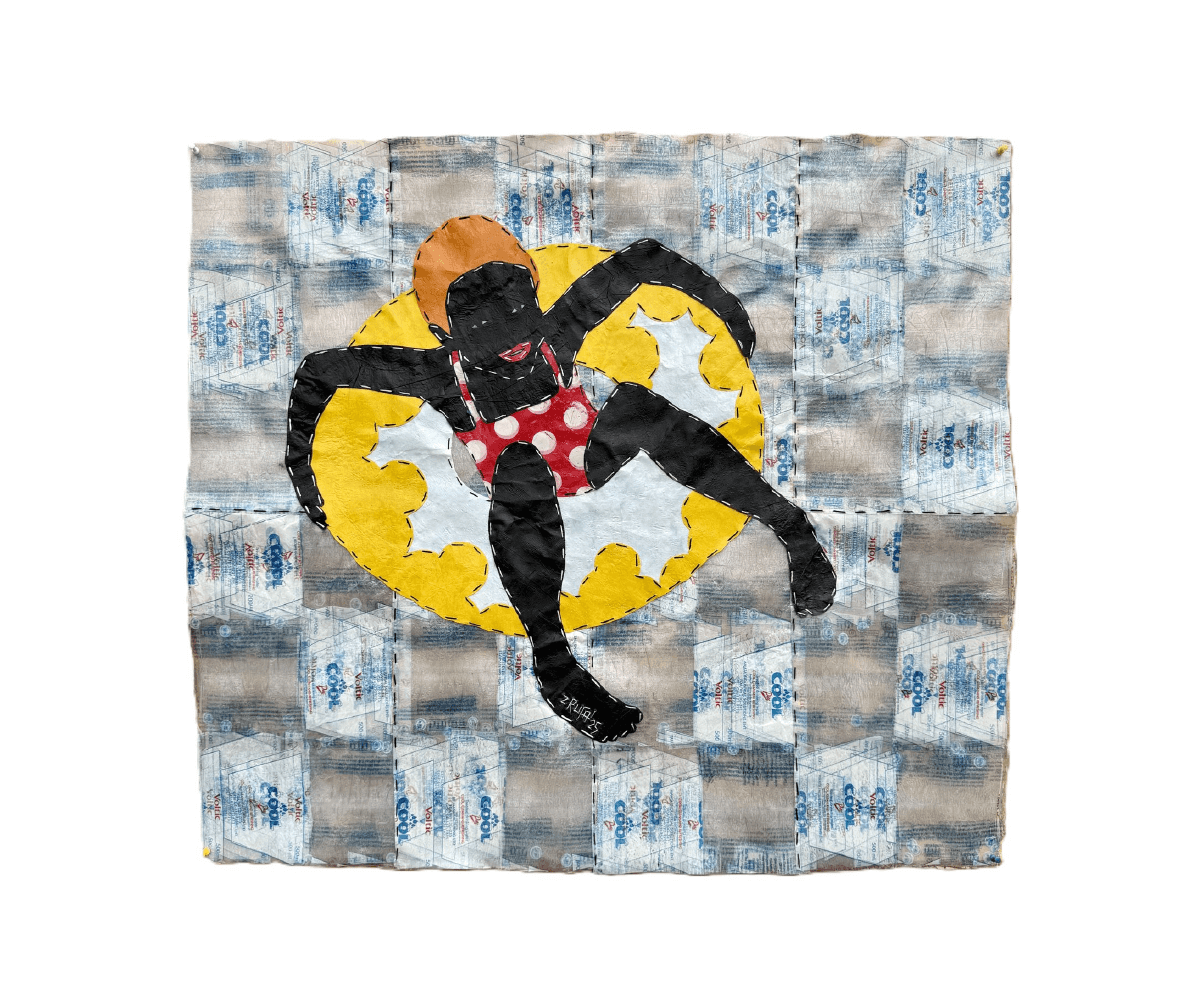
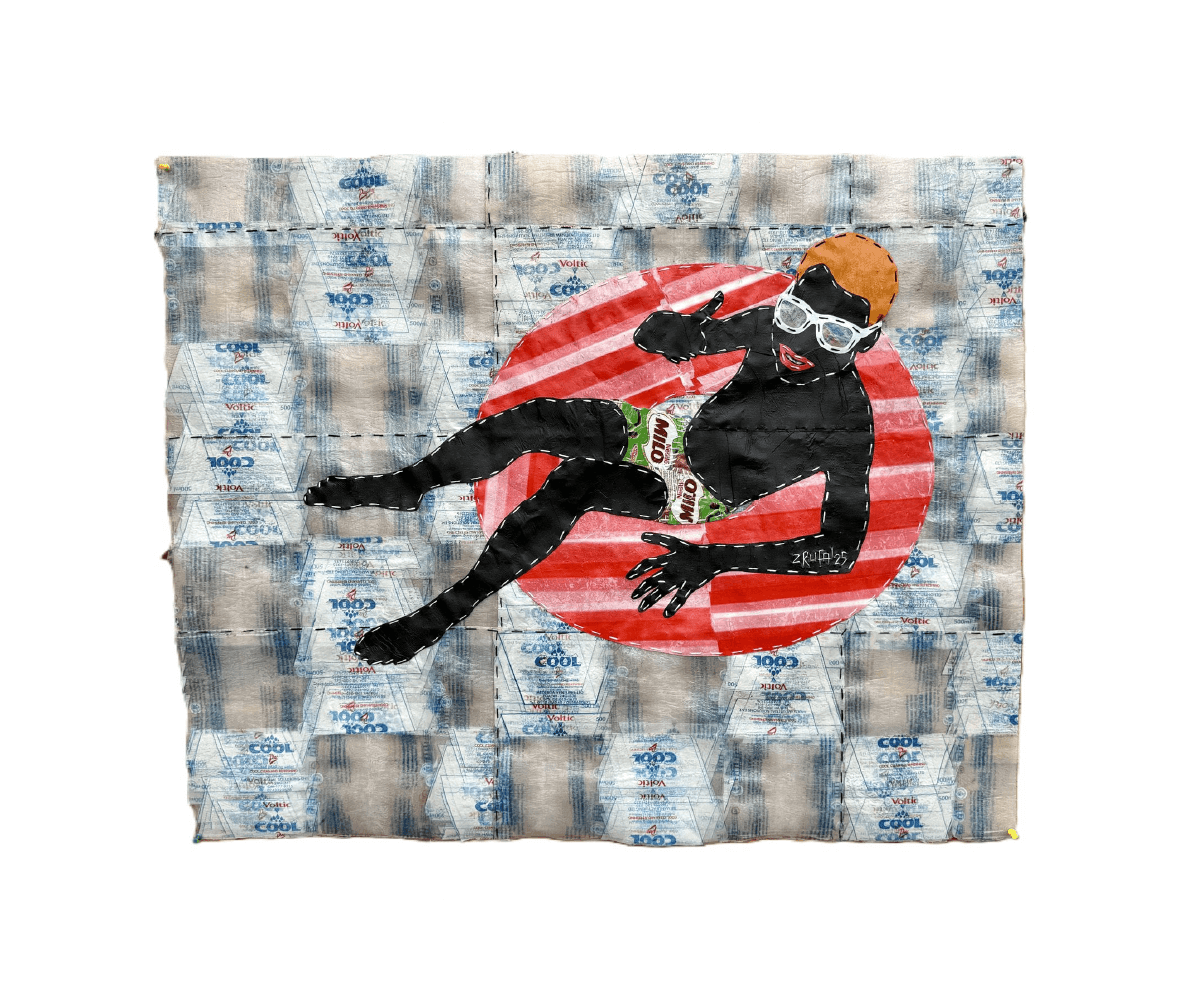
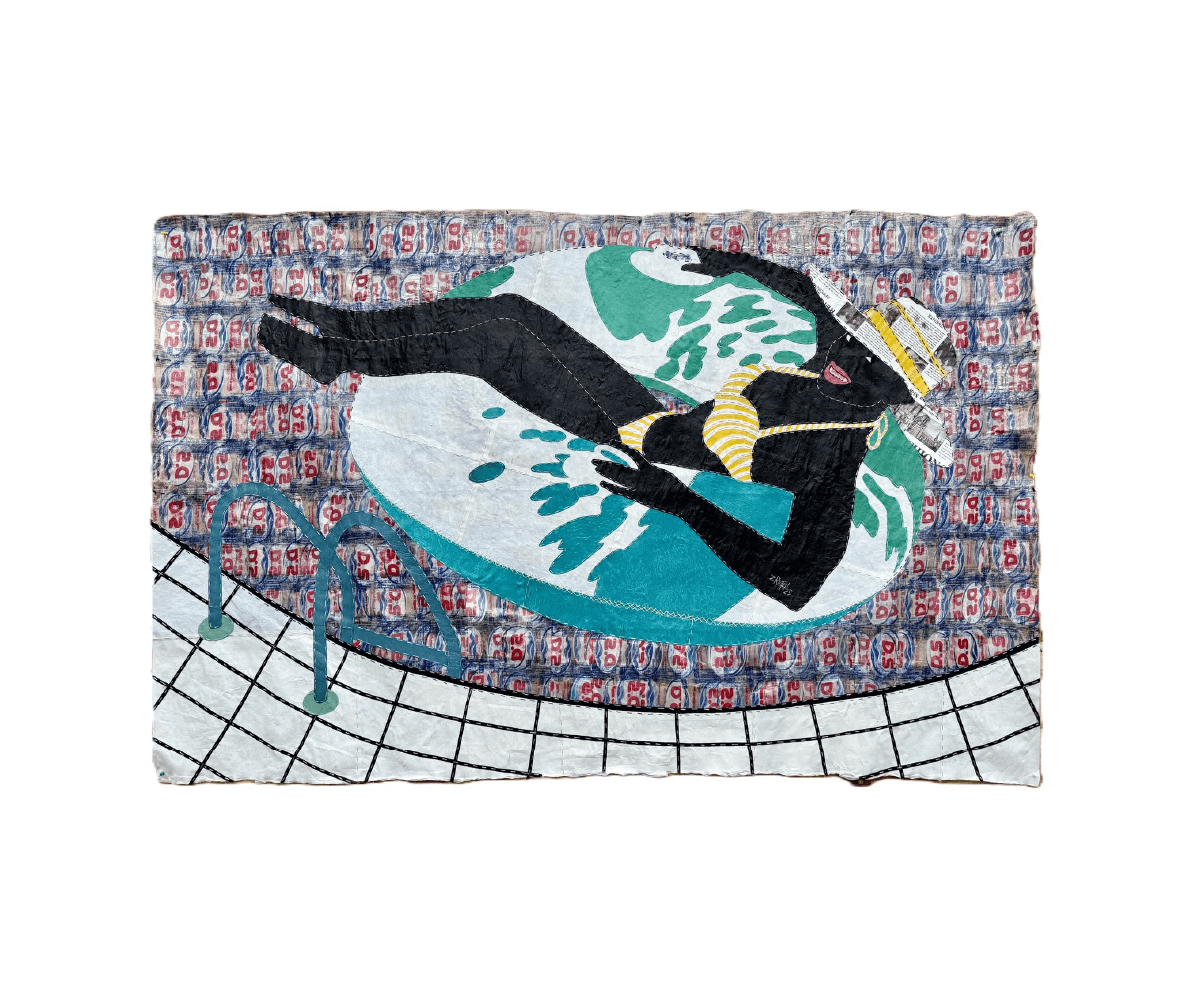
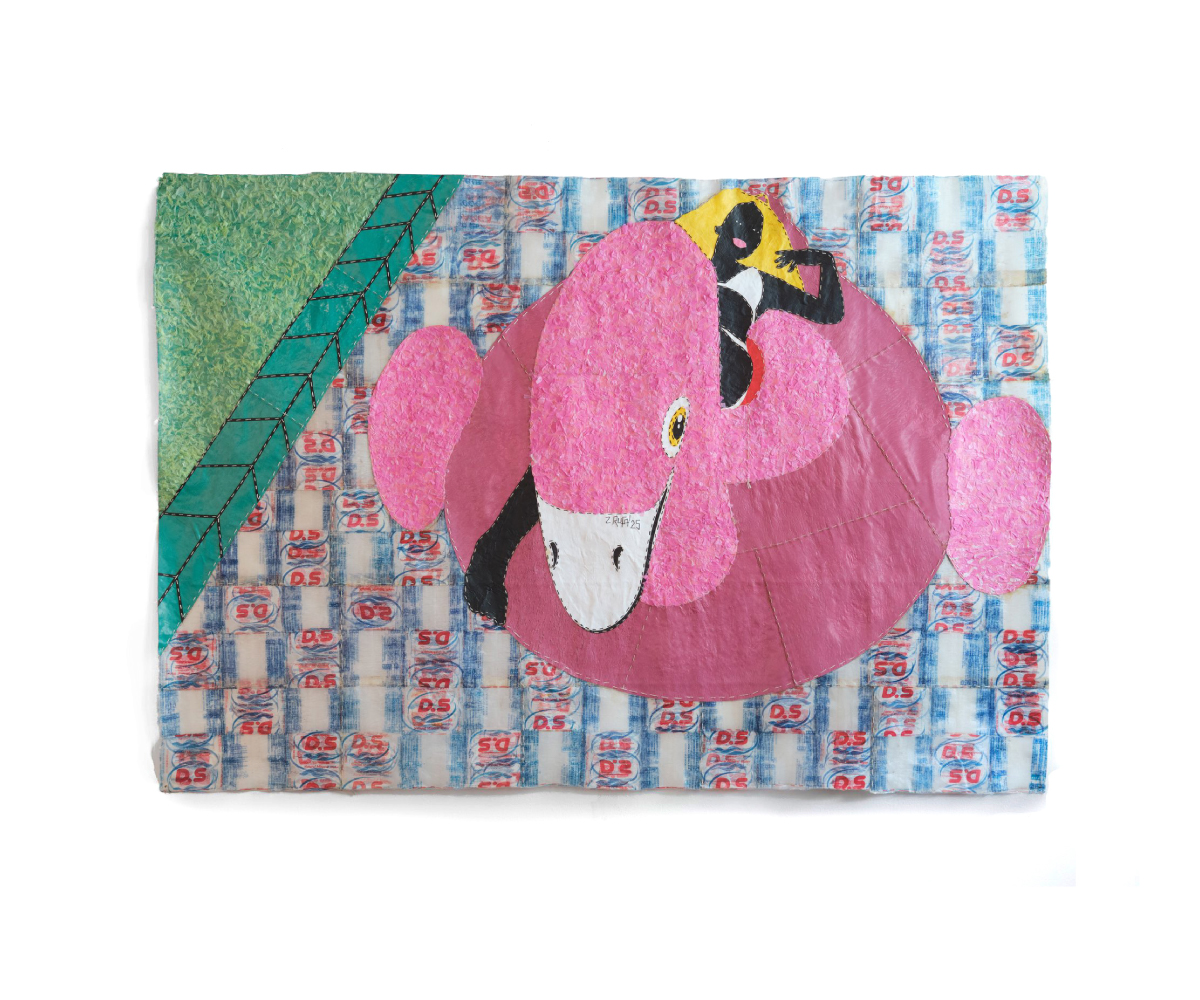
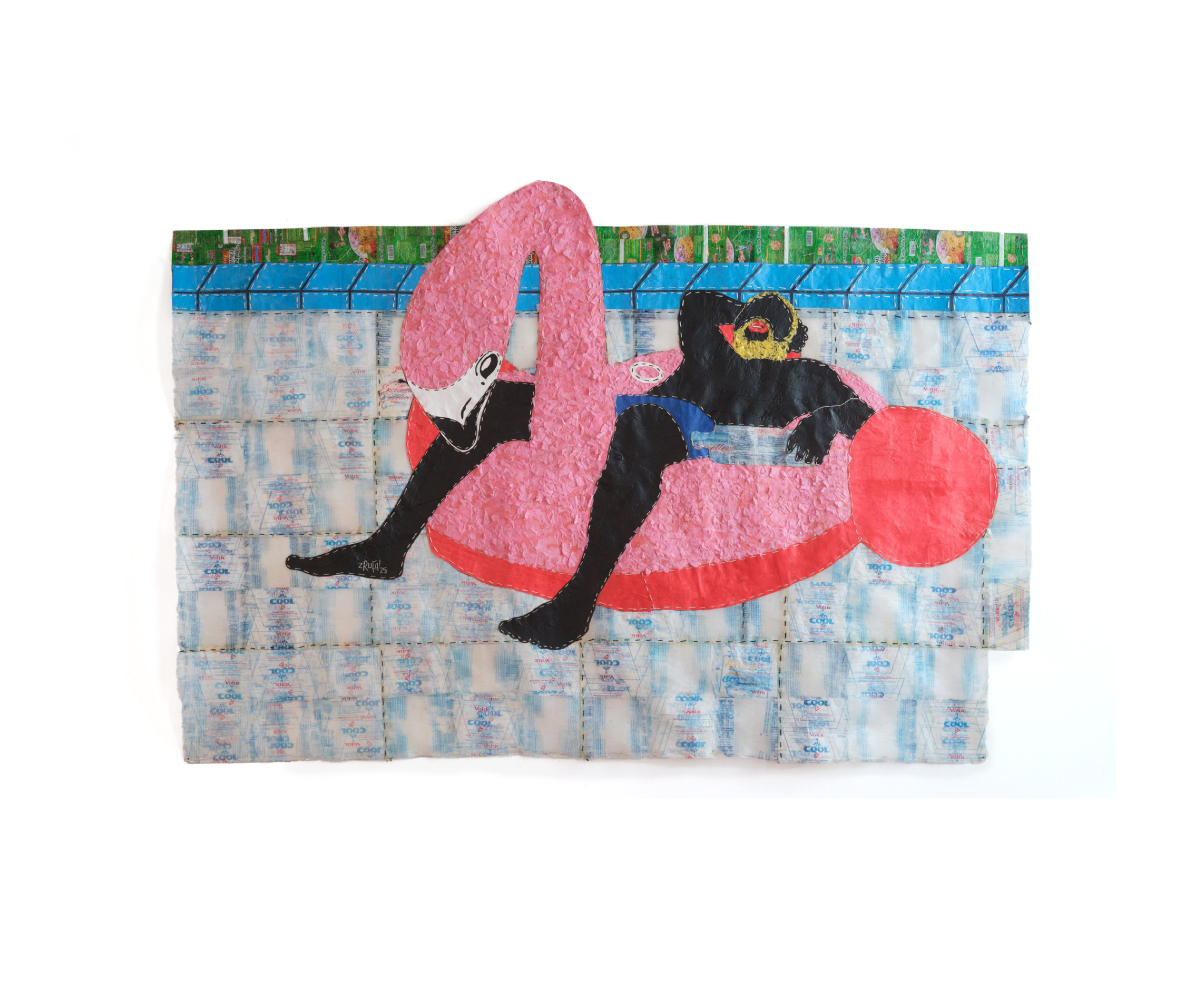
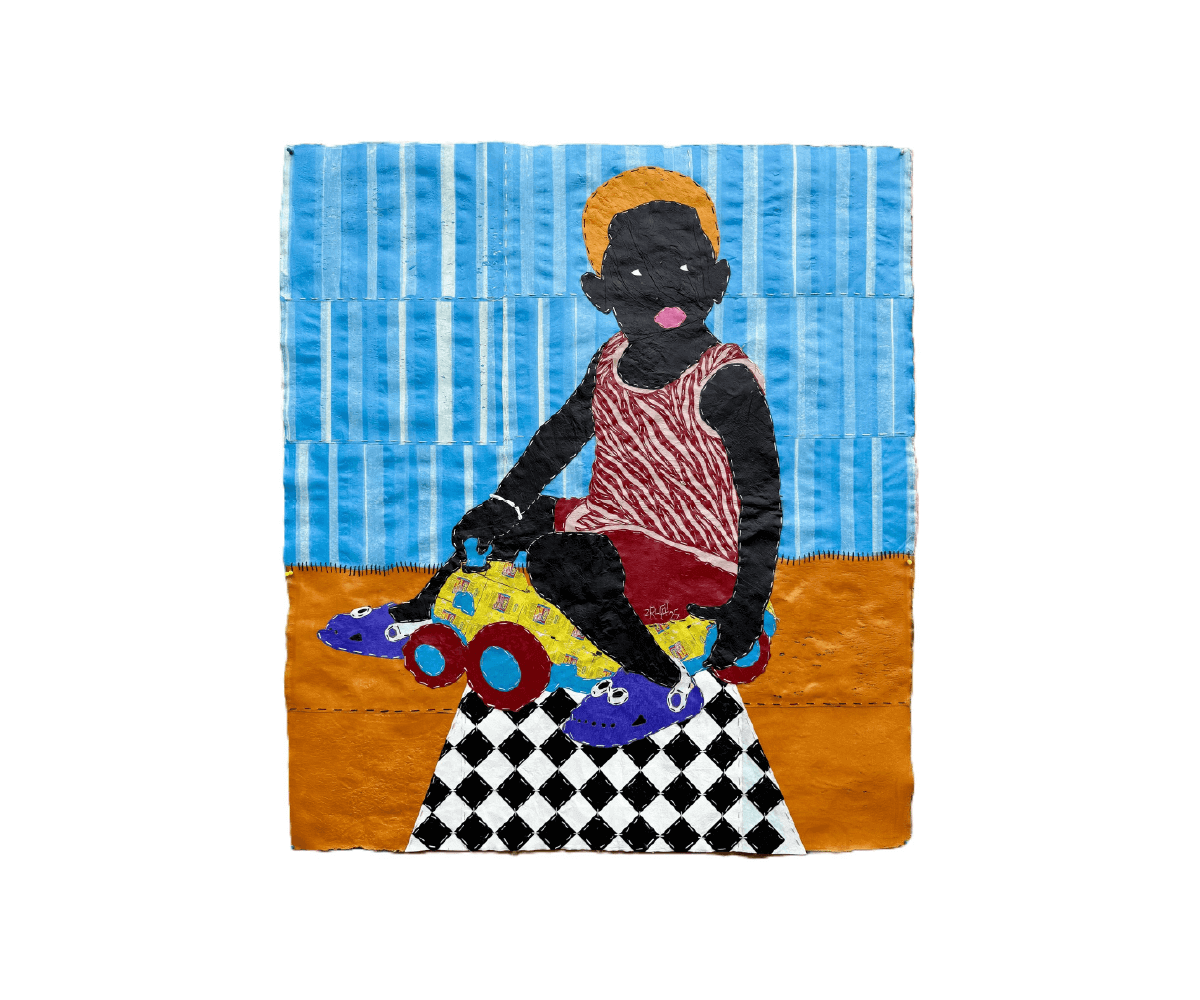
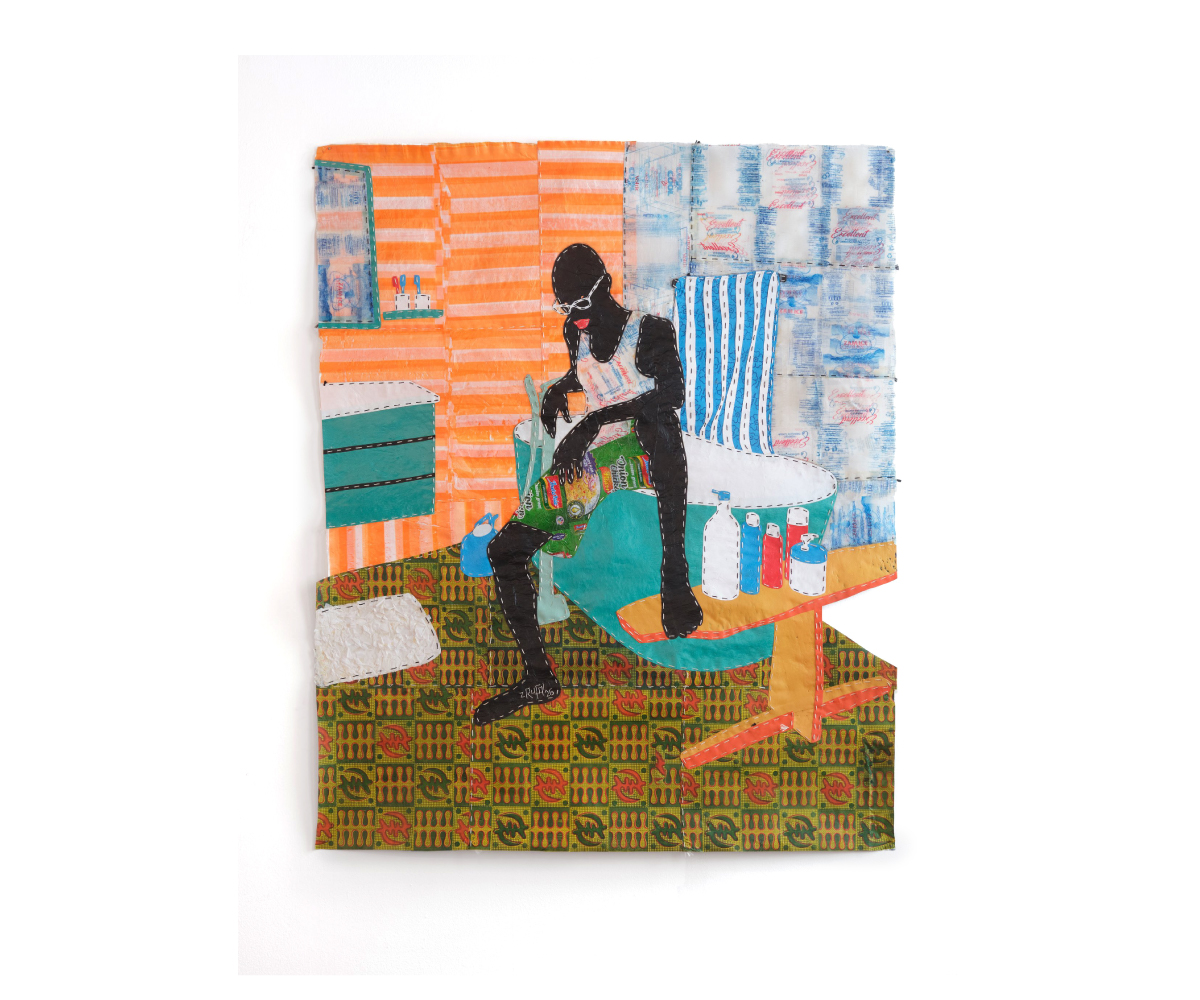
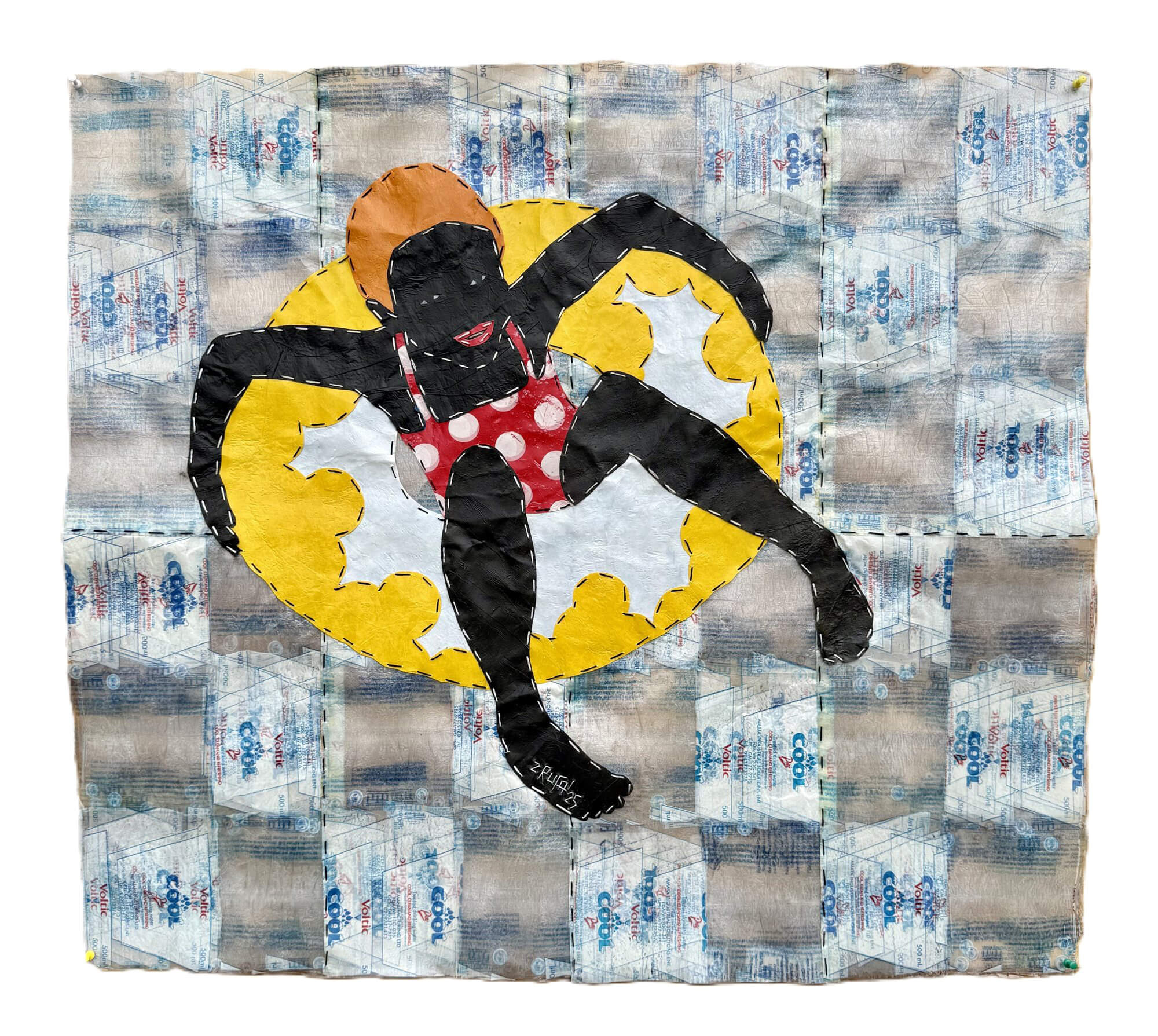
Rufai Zakari is widely recognized for his vibrant figurative works, particularly his portraits of women, which showcase the strength, resilience, and beauty of his Ghanaian community. For his latest solo exhibition, The Comfort We Chase, the artist considers the universal desire for comfort, peace, and emotional freedom amid turbulent times.
Whether through a trip to the beach, a cottage on a lake, or afternoons spent beside a neighbor’s backyard pool, water becomes both a literal and symbolic space of renewal, rest, and human connection. It serves as a universal gathering place where families and friends experience moments of relief, play, intimacy, and collective care that transcend geography and culture. Many of the works in the exhibition depict a solitary figure reclining atop a playful, oversized inflatable raft. Adrift in a pool, these individuals appear physically insulated from the pressures of the outside world. Their buffered experience allows for a fleeting space of rest, reflection, and respite from the demands of contemporary life. Through these scenes, Zakari quietly considers whether such moments of calm are a privilege afforded only to some or a fundamental human necessity.
Printed words and patterns embedded within the collaged packaging introduce additional layers of complexity and social commentary to the work. Much of the discarded plastic incorporated into the compositions once contained water itself. These single-use disposable sachets, originally used to hold and distribute water, are transformed into material that once again evokes water within the imagery, creating an intricate relationship between object, material, and representation. Beyond transforming discarded materials into compelling works of art, Zakari has established the Rujab Eco-Art Foundation, a community-driven organization based in Bawku, Ghana. Through the foundation, the artist merges visual art with environmental activism to address the growing impact of plastic pollution, consumerism, and industrialization within his community.
Rufai Zakari (b. 1990, Ghana) is a visual artist who lives and works between Accra and Bawku, Ghana. He completed his apprenticeship under Mozzay, a senior artist in Nima, Accra, and in 2011 earned his degree from the Ghanatta College of Art and Design. In his work, Zakari examines consumerism, environmental pollution, labor, trade, and the perils of industrialization in contemporary Ghanaian society. The founder of Rujab Eco-Art Foundation in his hometown of Bawku, he bases his practice on recycling waste from the streets of Ghana. Zakari’s work has been presented in numerous solo exhibitions, most recently at Kristin Hjellegjerde Gallery, London, UK (2024, 2021); San Luis Potosí Center for the Arts, Mexico City, Mexico (2023); Contemporary Art Matters, Columbus, Ohio (2023); Kristin Hjellegjerde Gallery, Berlin, Germany (2022); and Gallery T293, Rome, Italy (2022). Since 2014, he has exhibited widely across Africa, Europe, and the Americas. His work has also been presented in group shows at Kristin Hjellegjerde Gallery, West Palm Beach, Florida; The Columbus Museum of Art, Columbus, Ohio; 1-54 Contemporary African Art Fair, New York (with Kristin Hjellegjerde Gallery); Queretaro Contemporary Art Museum, Mexico; Kunstverein Wolfsburg, Germany; Untitled Art, Miami Beach (with Kristin Hjellegjerde Gallery); and The Armory Show, New York (with The Breeder Gallery). Zakari's work can be found in important private and public collections, including the Pizzuti Collection at the Columbus Museum of Art, Columbus, OH; Arthur Lewis Collection, Los Angeles, CA; Easton Capital/John Friedman Collection, New York, NY; Nubuke Foundation, Accra, Ghana; The Bunker Artspace Museum, West Palm Beach, FL; The Ditau Collection, Cape Town, South Africa; Susan Goodman Collection, Brooklyn, NY; VG Collection, Kallakurichi, India; Akron Museum of Art, Akron, OH; JOM Collection, Dakar, Senegal; AMMA Foundation, Querétaro, Mexico; and The Africa Centre Collection, London, UK.